Starting a small business is like embarking on a thrilling adventure. But amidst the excitement, it’s crucial to shield your enterprise from potential pitfalls. That’s where small business insurance steps in as your safety net, ensuring that unforeseen circumstances don’t derail your dreams.
In today’s volatile market, having the right insurance can be the difference between thriving and barely surviving. This guide will walk you through the essential types of insurance, helping you navigate the maze of policies with ease and confidence, just like a seasoned pro.






Overview of Small Business Insurance
Did you know that 40% of small businesses never reopen after a disaster? That’s why having the right insurance is crucial. It’s not just about protecting your assets; it’s about survival.
Small business insurance isn’t just a safety net—it’s a lifeline. It shields you from unexpected financial hits and gives your business the stability it needs to thrive. Here’s the deal: without it, you’re leaving yourself vulnerable.
Common Types of Small Business Insurance
There are several types of insurance every small business owner should consider. Each serves a unique purpose, but together, they create a comprehensive shield around your business.
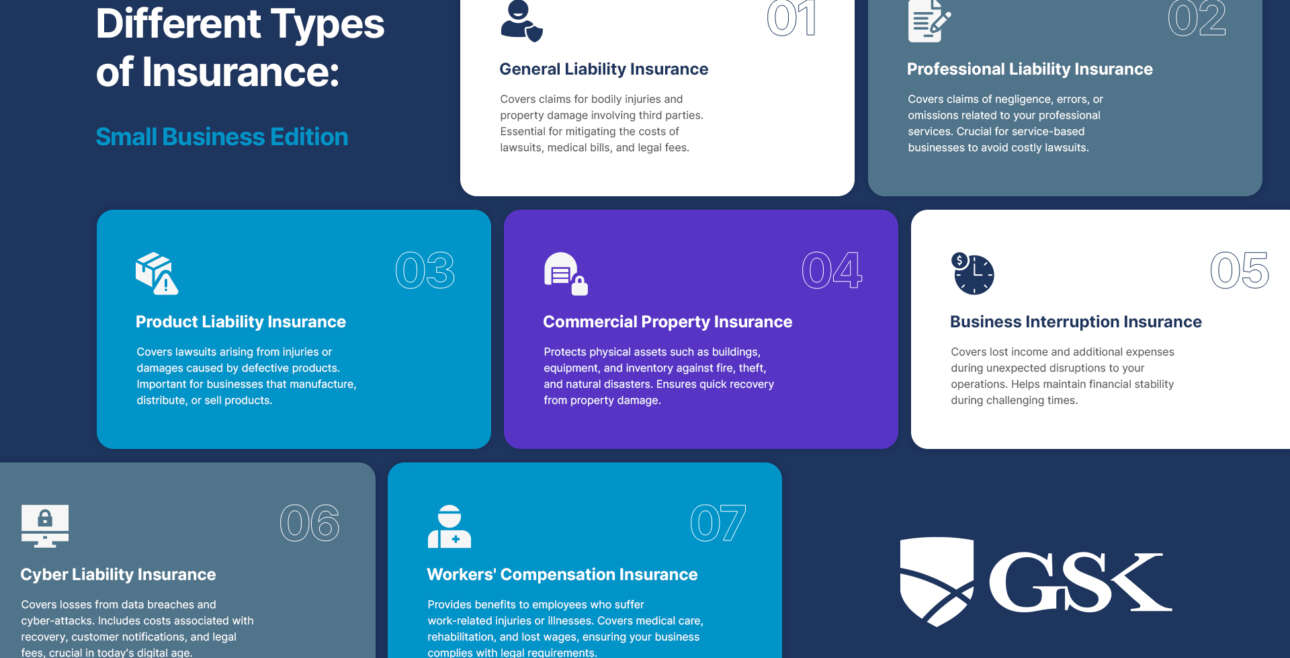
- General Liability Insurance: Covers accidents, injuries, and negligence claims.
- Property Insurance: Protects your physical assets like equipment and inventory.
- Workers’ Compensation: Mandatory in most states, it covers employee injuries.
- Professional Liability Insurance: Also known as Errors and Omissions (E&O), it protects against claims of negligence or mistakes.
- Business Interruption Insurance: Helps recover lost income during periods of downtime.
Examples of Businesses That Benefit from Insurance
Virtually any small business stands to gain from insurance. Here are a few examples that underscore its importance:
- A local restaurant saved from bankruptcy after a kitchen fire, thanks to property insurance.
- A tech consultancy protected against costly malpractice lawsuits with professional liability insurance.
- A retail store that continued paying employees during a flood, courtesy of business interruption insurance.
Pro Tip: Always compare policies and choose one tailored to your specific industry needs. One size doesn’t fit all!
Types of Small Business Insurance
Did you know that 40% of small businesses never reopen after a disaster? Having the right insurance can mean the difference between reopening and closing forever.
When it comes to small business insurance, understanding the types can keep you from becoming just another statistic. Let’s dive into the differences between liability, property, and workers’ compensation insurance.
Understanding Liability Insurance
Liability insurance is like a safety net for your business. It covers legal costs and damages if you’re sued for negligence. Imagine a customer slips in your store and breaks an arm. Without liability insurance, you could be on the hook for thousands in medical bills and legal fees.
Pro Tip: Even home-based businesses should consider liability insurance. Accidents can happen anywhere.
Property Insurance for Small Businesses
Property insurance protects your physical assets. Think about your office building, equipment, and inventory. If a fire or theft occurs, this insurance helps you replace what’s lost. But here is the deal: it doesn’t cover flood or earthquake damage unless added specifically.
Pro Tip: Take an inventory of your assets annually to ensure your property insurance coverage is adequate.
Workers’ Compensation Insurance Explained
Workers’ compensation is a must-have if you have employees. It covers medical expenses and lost wages if someone gets injured on the job. Have you heard about the bakery that avoided bankruptcy because workers’ comp covered a severe injury case? True story. It’s not just about compliance, it’s about protection.
Let’s break this down:
| Insurance Type | Coverage Details | Cost | Benefits |
|---|---|---|---|
| Liability Insurance | Covers legal costs/damages from lawsuits | Depends on business size | Peace of mind, financial protection |
| Property Insurance | Protects physical assets from damage/theft | Varies based on asset value | Asset replacement, disaster recovery |
| Workers’ Compensation | Covers employee injuries on the job | Percentage of payroll | Legal compliance, employee security |
Real-Life Case Studies
Consider the restaurant that survived a grease fire because their property insurance paid for a complete kitchen remodel. Or the tech startup that avoided a costly lawsuit thanks to their liability coverage. These businesses didn’t just survive; they thrived because they had the right insurance.
Ensure you’re covered. The right insurance can be a game-changer for your business.
Choosing the Right Insurance for Your Small Business
Do you know that nearly 40% of small businesses never reopen after a disaster? That’s why choosing the right insurance is crucial.
But with so many options, how do you make the right choice? Here’s the deal: it involves assessing your unique risks and finding the coverage that keeps you protected.
Factors to Consider When Selecting Insurance Policies
First, understand your industry. Certain industries have specific risks that require specialized coverage. For instance, a restaurant might need different policies than a tech startup.
Next, evaluate your business size and structure. Are you a one-person operation, or do you have employees? This will determine if you need worker’s compensation or not.
Pro Tip:
Always consult with an insurance broker who understands your industry. They can help you find tailored solutions you might overlook.
Step-by-Step Guide to Assess Business Risks
Step #1: Identify potential threats. Think about everything from natural disasters to cyber attacks.
Step #2: Quantify the impact of these threats. How much could a data breach cost you?
Step #3: Prioritize risks based on impact and likelihood. Focus on what could hurt your business the most.
Step #4: Review your budget. You need to balance the cost of premiums with the level of protection offered.
| Step | Description |
|---|---|
| Step #1 | Identify potential threats |
| Step #2 | Quantify the impact |
| Step #3 | Prioritize risks |
| Step #4 | Review your budget |
Decision-Making Flowchart for Insurance Selection
Here’s a simplified flowchart to make your decision easier:
- Start with assessing industry-specific risks.
- Consider the size and structure of your business.
- Evaluate different insurance providers and policies.
- Make sure to consult with a professional for expert advice.
- Choose a policy that fits your budget and coverage needs.
Insurance Costs and Budgeting
How much should you really be paying for your small business insurance? The answer might surprise you. Let’s break it down so you don’t pay more than you have to.
Insurance costs can be a major line item in your budget. BUT understanding the factors that impact premiums can help you manage these expenses effectively. Here is the deal: the size of your business, its location, and the industry you operate in can all significantly affect your insurance costs.
Factors Affecting Insurance Premiums
Every small business is unique, and so are the factors that affect your insurance costs. First off, the type of business you run plays a huge role. A construction business will usually pay more than a coffee shop because of the higher risk involved. Next, consider your business size and revenue. Larger companies often face higher premiums because they have more assets to protect. Also, your location matters. Businesses in areas prone to natural disasters or high crime rates might see higher costs.
Strategies for Budgeting and Reducing Insurance Costs
Reducing your insurance costs doesn’t have to be rocket science. Start with a risk assessment to identify areas where you can cut back. Implementing safety measures not only protects your business but can also lower your premiums. Shop around and compare different insurance providers. You’d be amazed at the difference in quotes for the same coverage.
- Bundle policies to save money.
- Increase your deductible to lower your premium.
- Maintain a good claims history.
Pro Tip: Review your policy annually to ensure you’re not paying for coverage you no longer need.
Calculating Potential Savings
Curious about how much you can save with these strategies? Let’s do the math. By comparing different plans, you can identify where the biggest savings lie. Here’s a simple table to illustrate potential savings:
| Insurance Plan | Annual Premium | Potential Savings |
|---|---|---|
| Plan A | $5,000 | $500 |
| Plan B | $4,500 | $800 |
| Plan C | $4,200 | $1,100 |
As you can see, a little bit of research goes a long way in saving your hard-earned money.
Legal Requirements and Compliance

Did you know that not having the right insurance can sink your small business faster than you can say “compliance”?
Understanding the mandatory insurance requirements for small businesses is not just a legal necessity—it’s a survival strategy. BUT navigating these requirements is often like walking through a legal minefield.
Mandatory Insurance by Industry
Different industries have different mandatory insurance requirements. Let’s break it down:
- Construction: Workers’ compensation is a must. Liability insurance is often required too.
- Retail: You typically need general liability and property insurance.
- Consulting: Professional liability insurance is crucial to protect against claims.
Here’s the deal: Failing to meet these requirements can lead to hefty fines or even business closure. Don’t risk it.
State-Specific Regulations Breakdown
Your business location changes the insurance game. Here’s a quick breakdown of some state-specific requirements:
- California: Requires all businesses to carry workers’ compensation, even if you only have one employee.
- Texas: Doesn’t mandate workers’ compensation but requires proof of financial responsibility.
- Florida: Mandates workers’ comp for construction businesses with more than one employee.
Pro Tip:
Check your state’s Department of Insurance website regularly to stay updated on any changes.
Compliance Challenges and Solutions
Complying with insurance regulations isn’t always straightforward. Here is the deal: you must juggle between understanding legal jargon and keeping your premium costs low.
The challenge? Balancing comprehensive coverage with affordability.
Here’s how you can tackle this:
- Consult with an insurance advisor to tailor policies to your business.
- Conduct regular audits to ensure ongoing compliance.
- Invest in software that tracks compliance requirements and renewals.
Remember, the right strategy can save you from costly penalties and keep your business afloat. Stay informed, stay insured!
Benefits of Having Small Business Insurance
Think small business insurance is just another expense? Think again. It’s your safety net when unexpected events strike.
Imagine a fire damaging your storefront or a customer slipping on your premises. Without insurance, these incidents can cripple your business financially. But with the right coverage, you’re not just protecting your assets—you’re ensuring your business’s survival.
Advantages of Insurance in Risk Management
Risk management is all about preparation and protection. With small business insurance, you’re not leaving things to chance. Instead, you have a robust plan that covers unexpected events.
- Insulation from financial ruin due to lawsuits or liability claims.
- Coverage for natural disasters, which can be pivotal in certain locations.
- Peace of mind knowing your business can recover from disruptions.
Scenarios Where Insurance Prevented Financial Loss
Let’s dive into some real-world scenarios. A restaurant owner faced a lawsuit after a customer claimed food poisoning. Insurance covered legal fees and settlements, sparing the business from bankruptcy.
Another case? A retail store experienced a break-in. With insurance, the owner replaced stolen goods without dipping into personal savings.
Pro Tip: Review your policy annually to ensure it still meets your business needs as you grow.
Testimonials from Small Business Owners
Testimonials speak volumes. Anna, a bakery owner, says, “Insurance saved my business after a kitchen fire. I couldn’t have reopened without it.”
John, who runs a tech startup, shares, “Cyber insurance was a lifesaver when we suffered a data breach. It covered recovery costs and helped us rebuild trust with our clients.”
Last Word
In the unpredictable world of business, having the right insurance isn’t just a safety measure—it’s a strategic advantage. By understanding and leveraging the right policies, you equip your small business not just to survive, but to flourish amidst challenges. So, take the leap with confidence, knowing that you’re prepared for whatever comes your way.
Common Queries
What are the key types of small business insurance?
The key types of small business insurance include liability insurance, property insurance, and workers’ compensation insurance.
Why is liability insurance important for small businesses?
Liability insurance protects your business from claims related to accidents, injuries, or negligence that might occur during business operations.
How can small businesses save on insurance premiums?
Small businesses can save on premiums by shopping around, bundling policies, and implementing risk management strategies.
Are there legal requirements for insurance in small businesses?
Yes, legal requirements vary by state and industry, but typically include workers’ compensation and sometimes liability insurance.
How do I choose the right insurance for my small business?
Consider your business’s specific risks, budget, and industry needs, and consult with an insurance advisor to tailor coverage to your requirements.
What factors affect the cost of small business insurance?
Factors include the type of business, location, number of employees, claims history, and coverage amounts chosen.